The way we climate control a home has changed. Today, when choosing a heating or temperature control system, it is no longer enough to think only about reaching a certain temperature. Energy consumption, temperature stability, comfort, maintenance and the ability to integrate different solutions are becoming increasingly important factors.
In this context, technologies such as aerothermal systems, inverter air conditioning and radiant floor heating are alternatives that can respond to different household needs. Each system has its own characteristics, but they all share the same goal: to use energy more efficiently and provide greater comfort in indoor spaces.
Aerothermal systems: making use of the energy available in the environment
Aerothermal systems use the energy contained in outdoor air to produce thermal energy. Through a heat pump, the system captures this energy and uses it to meet different household needs, such as heating and domestic hot water production, depending on the selected configuration.
One of their main advantages is that a large portion of the energy used comes from the environment. This helps reduce dependence on systems based exclusively on conventional heat generation and improves the overall energy performance of the home.
In addition, aerothermal systems can be integrated with low temperature heat distribution systems, such as radiant floor heating, creating a solution especially focused on comfort and efficient energy use.
Inverter technology: stable temperatures and efficient operation
Inverter air conditioning systems progressively regulate compressor power to adapt to the actual demand of the room. Instead of operating only through constant on and off cycles, the system adjusts its performance to maintain the selected temperature with greater stability.
This way of operating helps prevent sudden temperature changes and can reduce energy consumption compared with less efficient technologies, especially when the system is used for extended periods. It also supports quieter operation, a feature that is particularly valued in bedrooms, offices and other spaces where acoustic comfort matters.
Thanks to their versatility and ease of installation, inverter systems are widely used in both new homes and renovation projects.
Radiant floor heating: even warmth from the floor
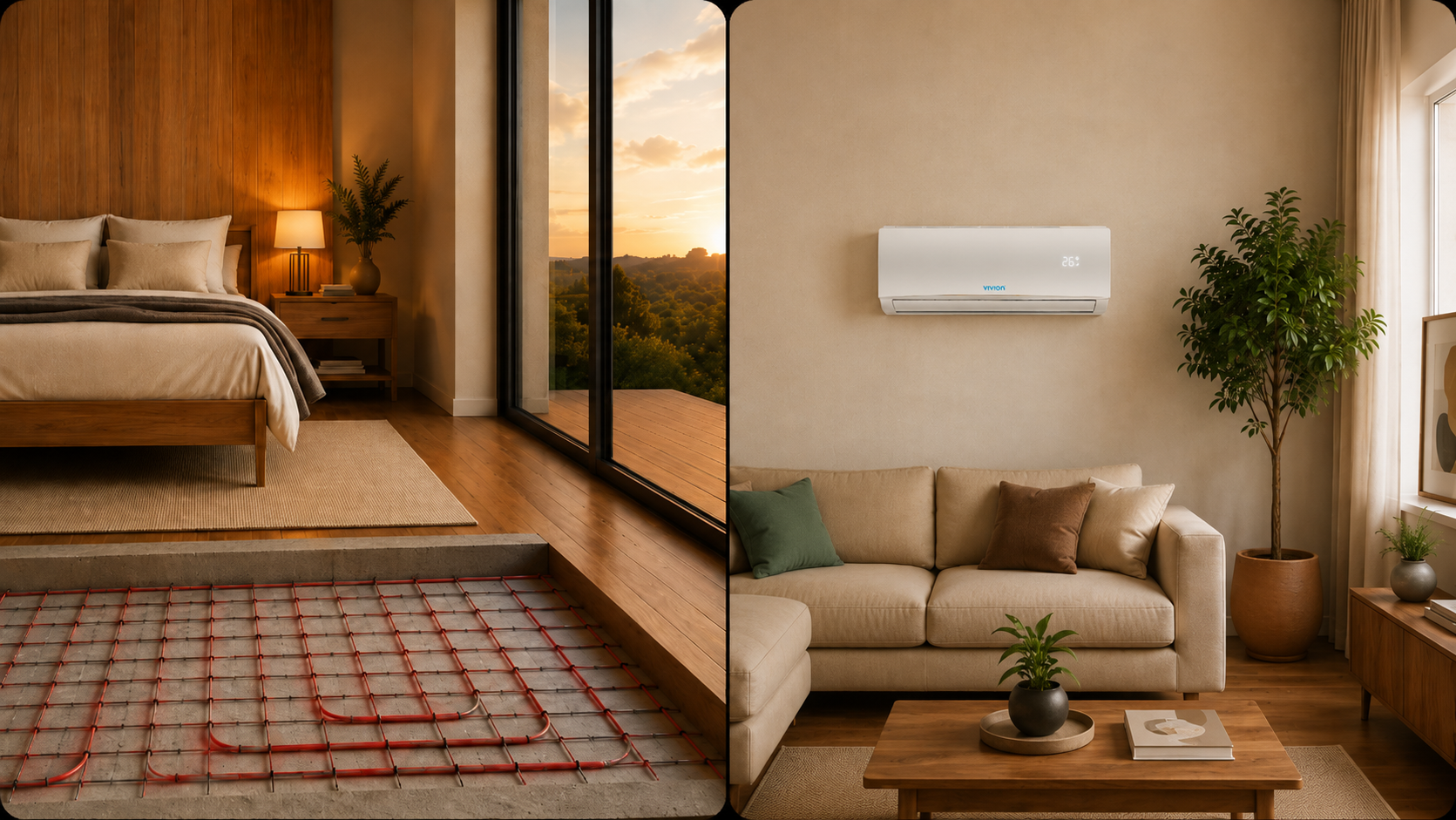
Radiant floor heating distributes heat from the floor throughout the room. By using a large surface to release thermal energy, it creates an even and comfortable feeling of warmth without relying on specific heat emission points.
Another characteristic is that it does not create the air currents associated with some climate control systems. This helps maintain a more even temperature throughout the space and makes better use of the available area, since it does not require visible equipment occupying walls or circulation zones.
When combined with a heat pump, radiant floor heating can operate with relatively low supply temperatures. This supports overall system efficiency and makes the combination an attractive solution for projects seeking thermal comfort and optimized energy use.
Efficiency starts with choosing the right system
There is no single solution that is suitable for every home. Floor area, thermal insulation, orientation, the use of each room, climate and the habits of the people living in the home all have a direct impact on the performance of any system.
For this reason, rather than comparing technologies in isolation, it is best to assess the project as a whole. Proper equipment selection and sizing make it possible to achieve the desired level of comfort while avoiding oversized systems, unnecessary energy use and solutions that do not match the actual characteristics of the home.
Comfort and responsible energy use can go hand in hand
The evolution of climate control systems makes it possible to approach comfort from a more efficient perspective. Aerothermal systems, inverter technology and radiant floor heating are examples of solutions designed to maintain comfortable indoor conditions while optimizing the energy used.
Investing in good climate control is not only about improving the temperature of a room. It also means considering how the home will perform over time, its energy consumption and the quality of everyday comfort. The key is to assess each project and choose the technology or combination of technologies that best meets its needs.